

Terracotta Watering Spikes v. Plastic Drippers
What is the difference between Terracotta Watering Spikes and plastic dripper spikes? Want to water your plants without having to think about it? Go on short breaks and know that...
What is the difference between Terracotta Watering Spikes and plastic dripper spikes? Want to water your plants without having to think about it? Go on short breaks and know that...

When it comes to watering potted plants, not all spikes are created equal.
On the surface, terracotta watering spikes and plastic dripper spikes might look like they’re doing the same job — slowly delivering water into the pot. But how they do it, and how your soil responds, is very different.
Let’s take a closer look at what’s actually happening underground.

Our Waterpot Spikes are made from low-fired unglazed clay. That material is naturally porous.
Water doesn’t pour out of them. It seeps.
And it only seeps when the surrounding soil is dry enough to draw it out.
This happens because of soil moisture tension. When soil dries, it creates suction. That suction pulls moisture through the microscopic pores in the clay wall. When the soil is moist, the suction stops — and so does the water flow.
So the spike responds to the soil.
It’s not on a timer.
It’s not dripping regardless of conditions.
It releases water based on what the roots actually need.
That’s why plants watered this way often develop stronger, deeper root systems. Roots grow toward the moisture source and cluster around it, accessing water directly as needed.
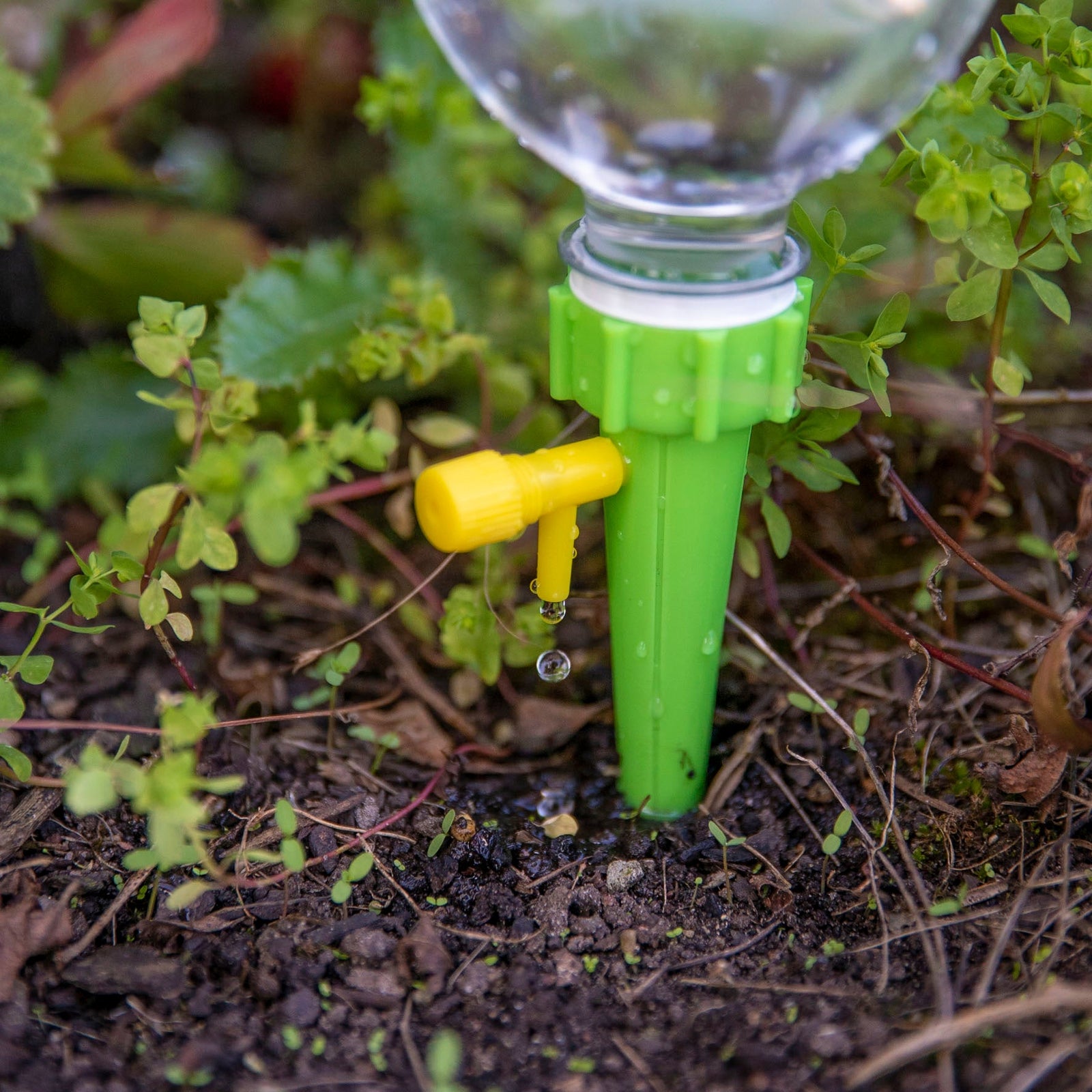
Plastic dripper spikes work differently.
They typically release water through:
A small hole
A valve
Or an adjustable drip mechanism
Water flows because of gravity and air pressure — not because the soil is drawing it out.
This means:
They drip whether the soil is dry or wet.
Flow rate depends on bottle height, air pressure, and hole size.
They can sometimes release water too quickly or too slowly.
In very dry soil, water may run down the sides of the pot without fully rehydrating the root zone. In already-wet soil, continued dripping can contribute to overwatering.
Plastic drippers, sprayers and weepers don’t actively respond to soil conditions the way porous clay does.
Here’s the key difference:
Terracotta spikes interact with the soil.
Plastic drippers simply dispense water.
Because terracotta releases water according to soil moisture tension:
The soil stays more evenly hydrated.
Roots grow toward the moisture source.
There’s less surface evaporation.
Water is delivered below the surface, where roots need it.
It’s a quieter, slower system — and one that works with the natural physics of soil.
Terracotta is made from natural clay and contains no plastic components. Plastic dripper spikes, while inexpensive and widely available, are petroleum-based and may degrade over time.
For gardeners looking to reduce plastic use, our clay spikes are a simple alternative.
Did you know that samples of every shipment of our terracotta Olla products are tested by an accredited Australian laboratory for heavy metals and arsenic, which some of our early adopters in our early years of product development requested? The Olla products comply with British Standard BS6748 (Category 2,3) which defines limits and test methods for toxic metal (lead and cadmium) release from food-contact surfaces. Why food contact surfaces? Because many of our Ollas are used in the growing of food.
At Upon the Rooftop, we’re always thinking about the soil first.
Our Waterpot Spikes use the same time-tested porous clay principles as traditional olla irrigation — just in a smaller format suited to pots and containers.
They’re simple.
They’re practical.
And they let the soil decide.

Let's find the right grow setup for you.
★★★★★ Loved by 3,000+ gardeners across Australia


